




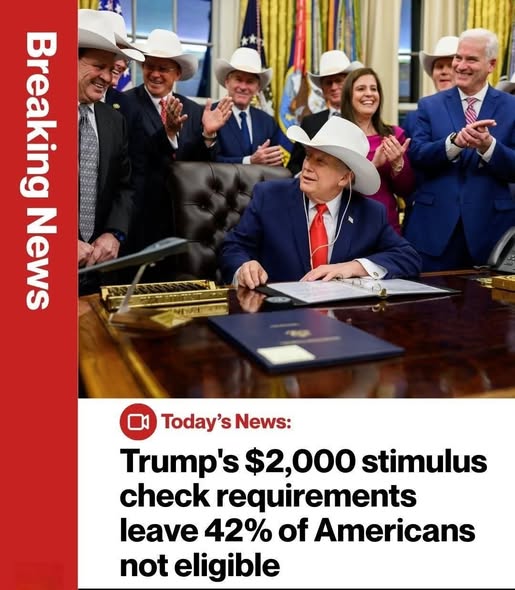
In a move that has sent ripples through both Wall Street and Main Street, former President Donald J. Trump has unveiled a provocative new pillar of his economic platform. Leveraging his preferred megaphone, Truth Social, the former president proposed a radical reimagining of American fiscal policy: using revenue generated from aggressive import tariffs to fund a direct “national dividend” for American citizens.
The proposal, which promises a payout of “at least $2,000 per person,” represents a significant shift in how trade policy might be used to influence domestic household income. As the 2024 political cycle intensifies, this plan has sparked a fierce debate among economists, policymakers, and voters regarding the true cost of protectionism and the feasibility of direct wealth redistribution.
The Mechanics of the Tariff-Funded Dividend
At the core of the proposal is a relatively straightforward, albeit controversial, fiscal mechanism. Under the plan, the federal government would impose or increase tariffs—essentially taxes on goods produced abroad and sold within the United States. Rather than directing these funds into the general treasury for infrastructure or defense spending, a designated portion would be earmarked for the “American Dividend.”
Trump’s vision targets a broad demographic, specifically noting that the $2,000 payments would be “paid to everyone,” with an exclusion for high-income earners. By linking trade barriers directly to the pockets of citizens, the proposal attempts to transform abstract trade math into a tangible benefit for the average household.
But how would such a system function in practice? To understand the implications, one must first understand the primary goals of the strategy:
-
Revenue Generation: Transitioning from income-based taxation toward consumption-based tariffs on foreign goods.
-
Domestic Incentive: Encouraging manufacturers to move production to the U.S. to avoid the “tax” at the border.
-
Direct Stimulus: Providing a guaranteed cash infusion to low- and middle-income families to stimulate local spending.
Economic Populism and the Case for Protectionism
Supporters of the tariff-funded dividend view it as a masterstroke of economic populism. For decades, proponents of “America First” trade policies have argued that the U.S. has allowed its industrial base to be hollowed out by unfair foreign competition. In this context, tariffs are seen not just as a defensive tool, but as a corrective one.
“The logic here is to leverage the immense value of the American market,” says one synthesized analysis of the plan’s supporting rhetoric. “If foreign nations want access to our consumers, they should pay a premium. That premium, in turn, is returned to the very citizens whose jobs and communities may have been impacted by globalization.”
By excluding high-income earners, the plan aims to ensure that the marginal utility of the $2,000 is maximized. Lower-income households are statistically more likely to spend additional cash immediately on essentials, potentially creating a “multiplier effect” that could boost local economies and retail sectors.
Key Takeaways: Trump’s Dividend Proposal at a Glance
-
The Payout: A proposed minimum of $2,000 per person for most Americans.
-
The Funding Source: Increased revenue from federal tariffs on imported foreign goods.
-
The Goal: To offset the costs of living and reward domestic consumption while penalizing foreign imports.
-
The Target Audience: Focused on low-to-middle-income earners; high-income individuals would likely be ineligible.
The Inflationary Risk: A Tax by Another Name?
Despite the allure of a $2,000 check, many economists are raising red flags regarding the potential “hidden costs” of such a policy. The central criticism of tariffs is that they are rarely paid by the exporting country. Instead, the domestic companies that import the goods pay the tax to the government, and those costs are frequently passed on to the consumer in the form of higher prices.
If a 20% tariff is placed on imported electronics, auto parts, or clothing, the retail price of those items typically rises. Critics argue that this could trigger a new wave of inflation, effectively “taxing” the consumer at the cash register to fund the dividend check they receive in the mail.
Furthermore, the “dividend” might be offset by the increased cost of living. If a family receives $2,000 but finds their annual expenses for groceries, vehicles, and household goods have risen by $2,500 due to tariffs, the net economic impact becomes negative. This dynamic has led some skeptics to label the proposal a “zero-sum game” that risks destabilizing price stability.
Geopolitical Friction and the Threat of Trade Wars
Beyond domestic shores, the implementation of a broad-based tariff dividend would likely face significant international headwinds. Global trade is governed by a complex web of agreements and the World Trade Organization (WTO) framework. A sudden spike in U.S. tariffs would almost certainly invite retaliatory measures from major trading partners like the European Union, China, and Canada.
History provides a cautionary tale. During previous “trade wars,” retaliatory tariffs often targeted American agricultural exports, such as soybeans and pork, hurting farmers in the Midwest. A dividend funded by trade barriers could inadvertently spark a cycle of protectionism that reduces the global demand for American-made products, potentially leading to job losses in export-heavy sectors.
Implementation Logistics: How Would the Money Move?
One of the most significant hurdles for the tariff-funded dividend is the “how.” The proposal currently lacks a detailed legislative framework, leaving analysts to speculate on the distribution method.
Several potential avenues exist:
-
Direct Payouts: Similar to the COVID-19 stimulus checks, sent via the Treasury Department.
-
Tax Rebates: Credits applied to annual income tax filings, reducing the amount owed or increasing refunds.
-
Healthcare Offsets: Directing the funds into a system of healthcare credits to lower insurance premiums.
Each of these methods carries administrative challenges. A direct payout requires a massive logistical undertaking, while a tax rebate might not provide the immediate “liquidity” that proponents of the plan envision. Additionally, the revenue from tariffs is notoriously volatile; if foreign companies stop exporting to the U.S. to avoid the tariff, the funding for the dividend could evaporate, leaving a hole in the federal budget.
Conclusion: A Paradigm Shift in Economic Thought
Donald Trump’s proposal to fund a national dividend through tariffs is more than just a campaign promise; it is a fundamental challenge to the “free trade” consensus that has dominated Washington for decades. It seeks to bridge the gap between industrial policy and social welfare, offering a populist solution to the perceived inequities of global trade.
However, the path from a Truth Social post to a functioning economic policy is fraught with complexity. The balance between protecting domestic industry and maintaining affordable consumer prices is delicate. Whether this plan can survive the rigors of economic modeling and legislative scrutiny remains to be seen.
As the debate continues, the fundamental question remains: Can a nation tax its way to prosperity, or will the unintended consequences of protectionism outweigh the benefits of a $2,000 check?
