


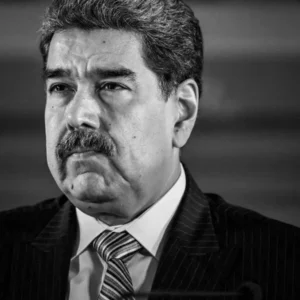
A sudden and unprecedented U.S. military operation on January 3, 2026, that resulted in the capture of Venezuelan President Nicolás Maduro has triggered a deep constitutional and political confrontation in Washington over presidential war powers. The strike — ordered by President Donald Trump without prior congressional authorization — has reignited longstanding debates about the balance of foreign policy authority between Congress and the executive branch.
In the wake of the operation, which involved coordinated U.S. military action in Caracas and led to Maduro’s removal from power and transport to the United States to face federal charges, lawmakers returned from recess to confront both practical and symbolic questions about law, precedent, and democratic accountability.
At the center of the debate is Senator Tim Kaine (D-Va.), who, alongside Republican Senator Rand Paul (R-Ky.) and other congressional leaders, forced a Senate vote on a war powers resolution designed to restrict any further U.S. military action in Venezuela without explicit authorization from Congress. The measure, S.J.Res. 98, passed the Senate on January 8 by a vote of 52-47.
Supporters of the resolution argue that Article I of the Constitution vests the power to declare war in Congress and that the Venezuela operation — however brief or targeted — represents a significant use of force that should not proceed without legislative approval. The resolution would require President Trump to seek congressional consent before undertaking further military actions involving Venezuela.
Senator Kaine framed the vote as more than a procedural dispute, asserting that congressional restraint of executive military action is essential to uphold constitutional governance and prevent the normalization of unilateral interventions. He and others argue that allowing presidents to initiate such operations without oversight sets a dangerous precedent for future engagements.
Opponents — including many aligned with the Trump administration — have countered that the specific military operation was limited in scope and does not rise to the traditional threshold of hostilities that require a declaration of war. Some lawmakers and administration officials have described the capture of Maduro as a law enforcement action against an indicted foreign national rather than a conventional war, though this characterization remains contested.
The Senate measure’s passage highlights a rare bipartisan concern — with five Republicans joining all Senate Democrats in backing the resolution — and signals growing unease among some lawmakers over executive authority in foreign conflicts. However, it faces significant hurdles ahead: it must still clear the Republican-controlled House of Representatives and is expected to encounter a likely presidential veto.
Observers note that this debate taps into a historical pattern in which presidents — of both parties — have engaged in military operations without formal declarations of war or clear congressional mandates, from post-9/11 actions to more limited interventions justified under broad legal rationales. Critics say such practices have gradually expanded executive power at the expense of legislative oversight.
Internationally, the U.S. operation has drawn strong reactions. Several Latin American governments condemned the strikes as violations of sovereignty and international law, while other allies expressed concern about the implications for regional stability and norms governing the use of force.
Domestically, the operation and ensuing war powers debate have ignited protests and political discourse about the legality and motive behind the U.S. actions. Detractors have argued that assertions by President Trump about “running” Venezuela or tapping its oil resources — comments made publicly after the strike — raise further constitutional and ethical questions. These remarks were widely reported, though Venezuelan interim authorities and international journalists noted that the United States does not exercise formal control over the Venezuelan state.
As the resolution moves forward, its passage or failure could shape not only future U.S. policy toward Venezuela but also the broader trajectory of American war powers governance. The debate underscores a central tension in U.S. constitutional design: balancing the need for decisive action in a complex world with democratic accountability and adherence to the rule of law.
