




Medical Disclaimer: This article is for informational purposes only and does not constitute medical advice, diagnosis, or treatment. Always seek the advice of your physician or other qualified health provider with any questions you may have regarding a medical condition.
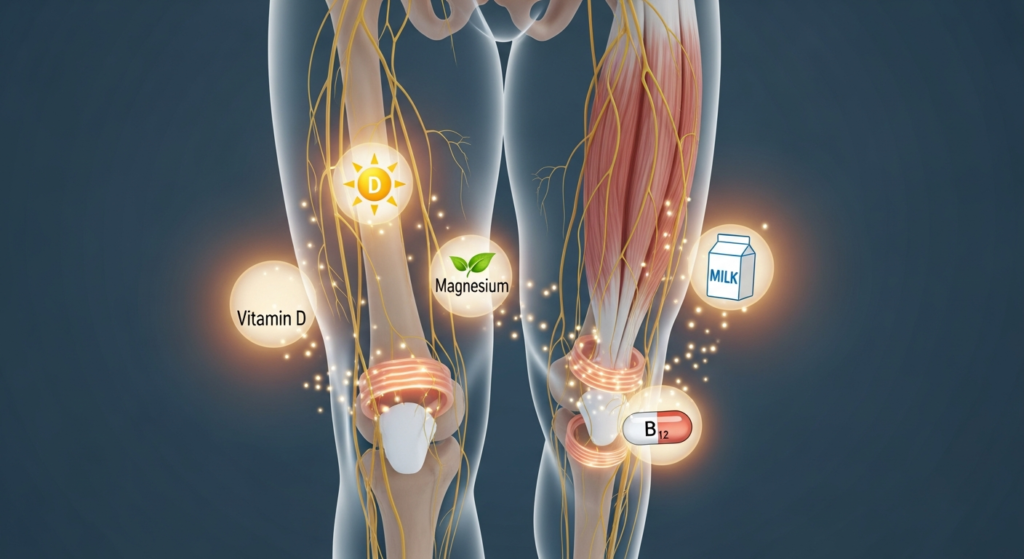
If you are experiencing persistent leg pain, muscle cramps, or deep bone aches, you might assume it is simply a sign of aging or overexertion. However, these symptoms are often the body’s warning signal of a nutritional gap.
Research indicates that specific vitamin and mineral deficiencies are leading causes of musculoskeletal discomfort. Addressing these deficiencies early can be crucial for osteoporosis prevention and avoiding long-term complications that might otherwise require advanced orthopedic treatment or pain management therapy.
Here are the four most common deficiencies linked to leg and bone pain.
Vitamin D: The “Sunshine” Deficiency
Vitamin D is arguably the most critical nutrient for skeletal health, yet an estimated 1 billion people worldwide are deficient. It acts more like a hormone than a vitamin, directly regulating how your body absorbs calcium.
Why it causes pain:
Without sufficient Vitamin D, your body cannot absorb the calcium you eat. This forces the body to “borrow” calcium from your bones, leading to a condition called osteomalacia (softening of the bones) in adults.
-
Symptoms: A deep, penetrating ache in the bones (often the legs, pelvis, and spine), muscle weakness, and a heaviness in the legs.
-
High-Value Action: If you have these symptoms, doctors often recommend a 25-hydroxy vitamin D blood test to determine if prescription-strength Vitamin D3 supplements are necessary.
Magnesium: The Muscle Relaxer
While calcium gets the spotlight for bone health, magnesium is the unsung hero of muscle function. It is responsible for over 300 biochemical reactions in the body, including the relaxation of muscle fibers.
Why it causes pain:
Magnesium deficiency (hypomagnesemia) essentially leaves your muscles in a state of constant contraction. This is a primary cause of severe leg cramps (often called “charley horses”) and Restless Leg Syndrome (RLS).
-
Symptoms: Sudden, painful spasms in the calves or feet, particularly at night; muscle tics; and general fatigue.
-
Dietary Sources: Dark leafy greens, nuts (almonds, cashews), and seeds. Many people also find relief through magnesium glycinate or magnesium citrate supplements, which are often marketed for joint pain relief and better sleep.
Calcium: The Foundation of Bone Density
Calcium is the building block of your skeleton. However, the body prioritizes maintaining calcium levels in the blood to support heart and nerve function. If your dietary intake is low, your body will strip calcium from your bones to keep your heart beating.
Why it causes pain:
Chronic calcium deficiency leads to osteopenia and eventually osteoporosis, making bones brittle and prone to micro-fractures.
-
Symptoms: In early stages, symptoms may be subtle, such as numbness or tingling in the fingers and toes. As it progresses, it manifests as generalized bone pain, joint stiffness, and an increased risk of fractures from minor falls.
-
Prevention: High-quality calcium supplements (often paired with Vitamin D for absorption) are a standard first-line defense recommended by
rheumatologists and orthopedic surgeons.Advertisement
Vitamin B12: The Nerve Protector
Vitamin B12 is unique because its deficiency impacts both the nervous system and bone density. It is vital for maintaining the myelin sheath, the protective coating around your nerves.
Why it causes pain:
A lack of B12 can cause peripheral neuropathy, a condition where nerves send incorrect pain signals to the brain. Additionally, untreated B12 deficiency has been linked to lower bone mineral density in the hips and lumbar spine.
-
Symptoms: A “pins and needles” sensation, burning, or shooting pain in the legs and feet. This is often mistaken for diabetic neuropathy or general joint pain.
-
Risk Groups: Vegans, vegetarians, and the elderly are at highest risk. Treatment often involves dietary changes or B12 injections administered by a healthcare professional.
When to See a Doctor
While supplements can be effective, self-diagnosis carries risks. Leg pain can also be a symptom of more serious conditions such as venous insufficiency, arthritis, or deep vein thrombosis.
If your pain persists for more than two weeks, consult a general practitioner or an orthopedic specialist. They can order a comprehensive metabolic panel to check your vitamin levels accurately. Investing in your health today through proper nutrition and testing is the most effective way to ensure mobility and avoid the high costs of future joint replacement surgery or chronic pain relief medications.
