




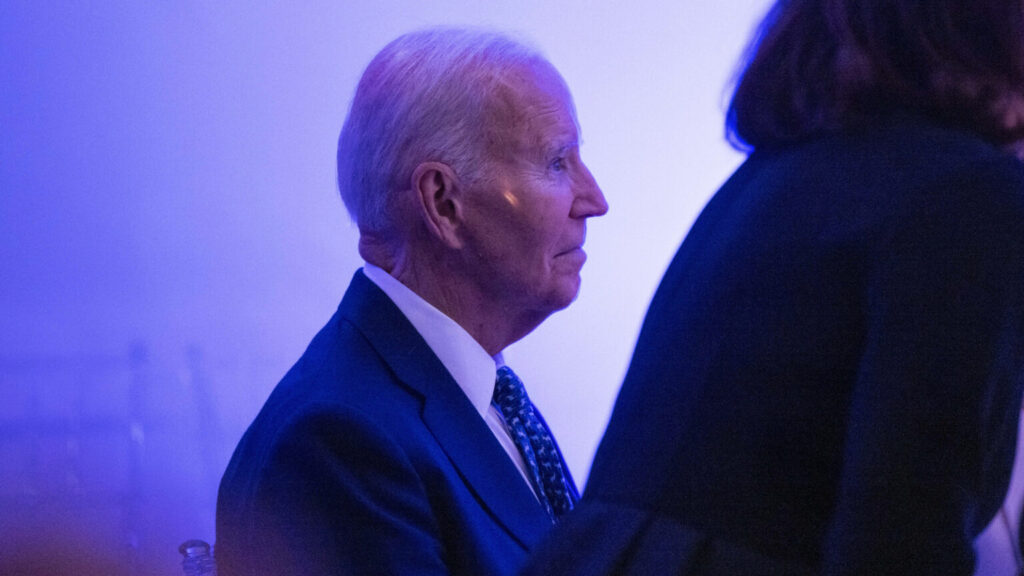
In a week marked by significant political and legal developments in Washington, D.C., Former President Joe Biden returned to the public stage to advocate for civil rights, while the Federal Bureau of Investigation (FBI) announced a pivotal arrest connected to the January 6, 2021, pipe bomb incidents. The dual events highlight the ongoing intersection of political advocacy and the pursuit of justice in the nation’s capital.
While Biden’s appearance at the International LGBTQ+ Leaders Conference drew attention to his enduring political themes—and continuing rhetorical challenges—the FBI, under Director Kash Patel, revealed new forensic findings that have reignited discussions regarding institutional accountability and investigative procedure.
Biden’s Message of Resilience and Unity
On Friday, Former President Biden delivered a keynote address at the International LGBTQ+ Leaders Conference, urging attendees to remain vigilant in the defense of democratic norms. His speech focused heavily on constitutional protections and the necessity of continued activism.
“Get up,” Biden implored the audience, framing the fight for equality as a central pillar of the American experiment. He characterized recent political shifts as attempts to “distort and derail” the fight for civil rights, specifically criticizing the movement led by former President Donald Trump. Biden argued that the opposition seeks to undermine public trust in government institutions, stating, “They’re trying to turn it into something scary, something sinister.”
Despite the gravity of his message, the speech also drew attention to Biden’s delivery. The former president experienced a verbal stumble, momentarily referring to the nation as the “United States of Amerigotit” before correcting himself to “the U.S.” While the gaffe circulated on social media, political analysts noted that his core message regarding decency and dignity continues to resonate with his base, who prioritize his legislative legacy and moral framing over his public speaking style.
Breakthrough in the Jan. 6 Pipe Bomb Case
Coinciding with Biden’s return to the spotlight, federal law enforcement officials announced a major development in one of the most perplexing unsolved cases related to the January 6 Capitol events. Authorities have arrested Brian Cole Jr., a 30-year-old resident of Woodbridge, Virginia, in connection with the pipe bombs placed outside the Democratic National Committee (DNC) and Republican National Committee (RNC) headquarters on January 5, 2021.
The investigation, which had stalled for years, saw renewed momentum following a strategic review ordered by FBI Director Kash Patel. Patel criticized previous leadership for what he termed “sheer incompetence or complete intentional negligence,” suggesting that vital leads had been ignored during the Biden administration.
According to court documents, the breakthrough was achieved through a forensic re-examination of evidence. Investigators utilized advanced geolocation analysis, provider records, and bank statements to link Cole to the devices. Cole is scheduled to make his initial appearance in federal court in Washington, D.C., marking the beginning of a high-profile legal process.
Forensic Analysis and Data Review
The arrest of Cole highlights the evolving nature of federal investigations, particularly in cases involving domestic terror threats. Deputy Director Dan Bongino reportedly spearheaded the initiative to re-analyze over three million lines of data. This “deep dive” approach focused on connecting fragmented digital footprints—specifically cellphone tower data and financial records—that had not been fully correlated in the initial stages of the inquiry.
Security experts suggest that this case serves as a case study in the importance of digital forensics. The ability to reconstruct events years after the fact demonstrates both the capabilities of modern law enforcement and the necessity of persistent oversight. The successful identification of a suspect after a prolonged delay underscores the argument that complex investigations require adaptability and a willingness to revisit initial assumptions.
The Intersection of Politics and Justice
These simultaneous events—Biden’s speech and the FBI’s announcement—underscore the complex political landscape in the United States.
On one hand, Biden’s address sought to reinforce a narrative of inclusivity and constitutional defense, positioning his political identity against the backdrop of rising polarization. On the other, the progression of the Jan. 6 investigation brings a sense of closure to a security lapse that endangered both major political parties.
Critics of the former president have pointed to the delayed investigation as a failure of executive oversight during his tenure, while his supporters maintain that his focus remained properly placed on broad democratic preservation. Conversely, the current FBI leadership is using the arrest to demonstrate a commitment to procedural rigor and transparency.
Conclusion: Restoring Institutional Trust
As the legal proceedings against Brian Cole Jr. commence, and as Joe Biden continues his public advocacy, the American public is presented with two distinct facets of governance: the rhetorical defense of values and the mechanical enforcement of law.
For the FBI, the priority remains ensuring that the prosecution of the pipe bomb suspect is handled with meticulous adherence to the law to restore public confidence. For Biden, the challenge lies in continuing to articulate a vision for the country that transcends the scrutiny of his communication style. Together, these developments reflect the ongoing struggle to maintain stability, accountability, and justice in a polarized era.
